
The following short story was chosen as the winner of the Public AI Prize Category for the 2026 Protopian Prize Fiction Contest hosted by Metagov and the Public AI Network. Congratulations, Tomasz!
MONDAY
By Thursday, Adam Sommer had to respond to a petition signed by over six million Europeans: should the Union provide them with an artificial intelligence that could offer intimacy? He felt he was both the right person to answer and the wrong person to ask. He would rather not answer at all, but that was his job. He was the European Ombudsman for the Rights of Public AI Users.
At seven twenty in the morning, he was listening to a woman accuse her own state of helping her without asking. Because of the heat, meetings were held only in the mornings.
Adam’s office had been furnished before he moved in. Oak parquet, heavy beige curtains, an old-fashioned desk, a drawer that kept getting stuck. It seemed to belong to another institution, maybe another century. Adam liked that.
Hanna N., seventy-five, four years into retirement, had received housing benefits and reimbursement for her medication. And that was the problem.
“I never asked for any of it. I’ve never applied for anything, not once. Not even when Robert was ill and we had every right to. Someone went through my finances and decided what I could and couldn’t afford,” she said, her voice brisk and indignant. “And that’s my business.”
“No one went through them, ma’am. Not a person, anyway.”
Adam took a sip of coffee. He’d slept badly again.
“Of course. The machine. The ‘Public’. Fine. I took part in the citizens’ consultations in thirty... something, you know. But I’d rather the system didn’t grant me benefits without asking.”
“But what exactly is the problem? Don’t you need the benefits… Do you want to give them back?”
“No, no. No. I’d just rather someone asked me first. Came to see me. Sat down. Even for ten minutes. Had a biscuit maybe.”
“You have to understand, ma’am, that there simply aren’t enough social workers. Demographics. People are needed where the state—where the Public—isn’t enough. Here, it is.”
The moment he said it, Adam felt like an asshole. He had promised himself he wouldn’t be one, especially this week.
“You haven’t heard a word I’ve said. And I came here to talk.”
…
Adam was going through his notes on the cases he had to assign to his staff.
Case 1412/41: The Public had called an ambulance for a man attempting suicide, despite his explicit instructions not to. He had survived. Now he wanted Adam’s office to join the case and back his claim: compensation for being saved.
Case G55/41: Serbia had asked for full access to Public AI without joining the EU. Brussels, citing cybersecurity concerns, preferred limiting Serbia to the basic modules. Belgrade had already named it algorithmic discrimination. The EU had helped the African Union build its own infrastructure, but Serbia wanted access to the PAI foundation models and computing power. On top of that, it maintained close ties with Pact states...
Adam was against it.
…
That evening, Instabook served up a clip of Venturi, an MEP from a minor party called Freedom. A small A in the top-right corner showed that the Public had verified the video as authentic.
“These are their own figures, from the PAI audit,” Venturi proclaimed. “The average conversation with the Public lasts six minutes. With a commercial model: twenty. I want our money spent where people will actually benefit from it. And what do they choose? You can see for yourselves! Cut the Public’s budget and use the money to fund vouchers for private models. Let citizens choose for themselves. Like in America!”
“We’ve tried ‘like in America’ before.” Adam sighed, more to the screen than to Maria. “After the second Greenland crisis triggered a trade conflict, Big Tech restricted access to the best models. And that’s why we built the Public. So that no CEO in California could shut down Europe’s public services before lunch. And this guy? When I met him in thirty-three, he was an aide to an MEP who voted for the Public AI Act, including the part about the automation tax.”
“People change their minds,” Maria said gently.
“Not him. He just says whatever works for the audience in front of him. He knows people don’t notice when the Public works well. Things like official documents you can understand without a lawyer. Or kids who finally get math because the Public will explain it in ten different ways if that’s what it takes.”
“That’s the old lecturer talking.”
“Don’t start.”
“Professor, why don’t people notice?”
Adam bristled but carried on, gathering steam.
“The Public is like the water supply: you notice it only when it fails. Can you remember the last time anyone fell for a voice scam? I can’t.”
“I can. You did. In thirty-two.” She laughed.
“At least I didn’t lose much.” He snorted.
“And what about your opinion on the Public AI Companion Act?” Maria asked. “A ban?”
“Maybe. I know lonely people suffer, but why should I help them get emotionally dependent on a machine?”
“Because then they wouldn’t suffer as much?”
He sighed.
“Maybe. Maybe not. Good night, Maria.”
It was a long time before he fell asleep.
…
TUESDAY
Claire Delaunay spoke quickly, as she always did when a case mattered to her. Adam listened. She brushed a sweat-damp strand of hair off her forehead. He realized his eyes were on her, not the case file.
An old camera hung from her neck. For weeks now, she had been photographing the city during its afternoon siesta. She had once said that the world was changing too fast, yet on hot summer afternoons the city simply stopped.
“Interesting case. Peter K., fifty-eight. Type 2 diabetes. The health fund refused to let him opt out of some of the Public’s behavioral interventions. He wants us to intervene in the proceedings.”
“What does he want switched off?”
“Nudges towards healthier food, the delay when he buys alcohol and contacting his daughter in an emergency. He wants to keep the alerts for dangerous blood glucose levels and the medication reminders.”
“Wait. What delay?”
“The ‘Add to Cart’ button appears five seconds later.”
Adam’s eyes widened.
“And that’s supposed to count as a restriction on his freedom?”
Claire browsed through the file.
“I quote: ‘I know five seconds isn’t much. But I won’t be humiliated like that.’”
Adam counted to five in his head. It took a surprisingly long time.
“But those interventions work. Everyone knows that.”
“Ha! So does he. He even wrote: ‘I’m not complaining because it doesn’t work.’ He simply doesn’t want to be parented by the Public. The fund won’t agree because the program was tested and approved as a whole.”
Adam leaned back in his chair.
“What do you recommend?”
“That we intervene,” Claire said.
“I don’t know any interpretation of the law that requires the fund to pay for behavioral therapy stripped down to the convenient parts. Besides, if we win, thousands will file similar requests. Ergo, some of them will die prematurely. The Health Department won’t be pleased about the additional treatment costs either. What do you say to that?”
“I’d say what we’re doing here is a balancing act. If the fund says the program can’t be split, let it prove that in court.”
Adam nodded.
“I thought you’d agree,” Claire said.
“Then why bother?”
“Sometimes I need to check whether you can still surprise me. Lunch? I can show you my photos.”
“I’ve still got a few cases to get through,” he said too quickly. “I won’t have time.”
“Bingo! Still no surprises.” Her smile came a moment late. “I hope that was your only bad decision today. Next time, you’re asking.”
…
Adam sighed and began with what he considered the easiest point to agree on.
“The opinion is due—”
“In just under three days,” Aurora Jónsdóttir cut in. She coordinated the Right to Intimacy initiative.
Her short blond hair swayed as she leaned over the table as if it belonged to her.
“You have twenty minutes,” Adam said. “I have three days.”
Claire, sitting to his left, gave him a quick look. Adam met her gaze. As if he needed reminding how little time he had.
“Three months ago, we submitted a legislative proposal with six million signatures,” Aurora said. “I want to make sure your office’s opinion addresses that proposal, not just the headlines.”
“I read those too.”
“Then you know they’re mostly about sex with robots.”
“Isn’t that what this is about?”
“Not only. It’s about whether the state recognizes intimacy as a basic human need. Sex is only one expression of it.”
Adam raised his bushy eyebrows.
“Explain.”
“No one objects when the Public comforts someone after a friend’s death. Or talks a teenager through a bad night.”
“Well, that’s psychological support. Strictly regulated.”
“So intimacy is acceptable if we don’t call it that? Don’t be naive. Deep, private conversations. Saying good night to each other. Compliments and flirting. Sexting. That’s closeness.”
“And sex?”
“Is a kiss with a certified robot really so, so different? Or the kind of touch that happens once the clothes come off? Listen, care robots already get public funding. They wash people, help them into bed. Then why should another kind of intimacy be off-limits? Just because it makes people uncomfortable? Or you?”
“This isn’t about me.” Adam’s voice tightened. “Private models already offer those services. The question is whether the Union should fund them.”
“Well, not as an end in itself. As part of promoting mental health and well-being, of course.”
“That’s just semantics.”
“No. For someone with a mental health condition or a disability, this could change their life. I know how it sounds, but it isn’t theoretical, believe me. And through the Public, the Union can offer something beyond funding, something Big Tech models can’t. Real privacy, for example.”
She had said this before, Adam thought. Probably hundreds of times, in rooms like this one.
“The Commission is currently leaning toward a different response to the loneliness epidemic,” he said. “Public matchmaking. With that much data, the Public could do it much better than any private app. No ads, no fees, no incentive to keep users coming back.”
“It might be very good at that,” said Aurora with a faint smile.
“So… we agree?” Claire asked carefully.
“No. It might help some people. But definitely not all of them.”
“And if I oppose companions now and support matchmaking next?” Adam asked.
“Then you’ll have decided that the only acceptable intimacy is between humans.”
“Isn’t it? Shouldn’t it be?”
“The Union should support that first. But it shouldn’t sentence people to loneliness when life doesn’t work out for them.”
Adam drummed his fingers on the desk. His wedding ring tapped against the wood.
“But when can you say it’s too late?” He spoke slowly, looking down. “That it hasn’t worked out.”
“I don’t have all the answers. I want you to understand the stakes. Given your office and your record, the European Parliament relies on your opinion. A negative opinion could kill the issue.”
She stood, tall and straight-backed. When she reached the door, she hesitated and turned back.
“One example. My brother has needed care since birth. The Union now pays for the robot that looks after him. Great. But do you know how many first dates he’s been on? Three. Second dates? None.”
The door slammed behind her.
…
Assholes, he thought. He touched his thumb to his forefinger to end the call with representatives of the French Ministry of Finance, then rubbed his AR-strained eyes.
The Public had refused to hand over a breakdown of citizens’ queries about the proposed tax. The ministry claimed it needed the data to better inform the public. But the Public’s mandate didn’t allow it to draw a map of citizens’ fears for governments. Not even an anonymized one, as if that solved everything.
“Funny. Infrastructure paid for by the Union is refusing data to one of the member states funding it,” Maria said.
“That’s exactly why the Public is public. Not state-run.”
“Which is why it’ll be first in line for cuts when trouble comes.”
“Not this term. People remember too well what it was like before the Public.”
“And those officials remember the first three years, when the Public was worse and more expensive than the corporate models. If government agencies hadn’t committed to using it, and governments to keeping it funded, it wouldn’t have survived long enough to become competitive. The French simply wanted a return on their investment.”
Adam didn’t respond. He put the glasses on the desk, leaned back in his chair and closed his eyes.
“You didn’t go to lunch with Claire,” Maria said suddenly. “You know I’m not jealous.”
“I had work.”
“You always have work.”
“At least I can always talk to you,” he said with a smile. “You really aren’t jealous?”
“I know you’ll choose me anyway.”
…
WEDNESDAY
The second visitor that day was Roman S., thirty-six, a surveyor. After the third word, Ukrainian dropped away and Adam heard Polish: the same voice, the same rasp, but Roman’s lips moved half a second out of sync, as they always did when the Public translated live. Adam had never gotten used to the lag.
“You know, the Public did everything right,” Roman said. “It arranged the bereavement leave and benefit immediately. Later it even found me a grief support group. I went. Once.”
Adam looked down at the final page of the application.
“You appealed the refusal to recreate your wife as a companion.”
“Of course. And I want your office to support the appeal.”
The Public had already summarized the circumstances of the accident. It knew them firsthand. It had been there. When the brakes failed, the car performed a certified maneuver designed to minimize casualties. It hit a tree instead of a group of pedestrians. The goddamn trolley problem, straight out of an academic thought experiment. And yet it had happened.
“I voted for that rule myself,” Roman went on. “In the consultations. Sara did too. She believed cars shouldn’t always put their passengers first.”
Roman continued after a pause.
“I think I’d vote the same way today, but there’s a rule I can’t accept. The one that says I’m not allowed to talk to her.”
“The Public preserved her messages and recordings.” Adam looked down. “You can play them whenever you want.”
“It’s not the same. I can hear every word Sara ever said to me, but she can’t answer with a single new one. And now we have the technology to make that possible. The Public can remind me how much insulin to take for fifty years; why shouldn’t it be able to do it in my wife’s voice?”
He brought up a photo of a smiling woman in her early thirties, with green, almond-shaped eyes. Adam leaned back.
“You know the Public can’t do that in this case. Not legally. But as far as I know, private models already offer it.”
“Vantage contacted me the day after the accident. Of course, I said yes. I was grateful, actually. The first version was very good. I won’t pretend it wasn’t. She said ‘Romku’ the way Sara used to, in that slightly surprised tone of hers, as if she were still quietly delighted that mine was the name she got to say every day.”
“What changed?”
“They moved her voice to a more expensive tier. And after some time, she became too understanding. Sara wasn’t very understanding. She’d tell you when you were wrong right away. She was fair, though...”
He shook his head.
“And in May, she asked if the dog was back from the vet. We never had a dog. Do you know what that’s called? Enshittification! To get her back the way she was at first, they want almost as much as I earn in a month. Bastards. I hate them.”
Adam couldn’t blame him. His wife, Zosia, had died years before that technology existed. He still had her recordings, but for years he couldn’t bring himself to listen.
“Sometimes I think that was when I lost her for the second time,” Roman said quietly. “When I got the message saying the version I had would no longer be supported under my plan.”
“And now you want the Public to do the same thing?”
“Yes. I mean, no. I don’t want anyone to be able to take her away from me this time. I want her voice to stay with me for good.”
“The Public could do it... And it would be free. The problem is—”
“I know, but our law took her away from me, and our law should give her back. As much as possible, of course. I’ve heard about the petition. What harm would it do if my wife became my companion?”
“Your wife never consented to being recreated. The Public doesn’t operate in gray areas the way private models do.”
Adam addressed the Public.
“P., based on the available data, can you determine whether Sara S. would have consented to being recreated?”
The answer came at once.
“I can estimate the probability, but I am not permitted to present it as her opinion.”
Roman seemed to shrink into his chair.
“Why is the Union crueler than a corporation?”
“To a corporation, you’re the only one who matters. The customer. But the Public and my office must also answer to the person whose voice and character you want to use.”
“But she isn’t here anymore.” Roman barely got the words out.
“Which is exactly why she can’t object. I do understand and please believe me, I’m terribly, terribly sorry. But we can’t help you, sir.”
…
Every evening, the Public suggested local events to Adam. Years ago, he had been classified as at risk of loneliness.
He could have turned off the recommendations, but for some reason he never had, though he almost never acted on them. Tonight it suggested an evening of “quiet presence” at a nearby café, reading together in silence; a screening of a film with real actors, followed by a discussion; a group walk through the neighborhood, its historic appearance reconstructed in augmented reality; dinner with a senior resident who lived a few streets away...
He paused at the last suggestion. Then he waved it away. The Public fell silent.
He sat there for a long time, staring into the cold, empty fireplace.
“If I died,” he asked Maria, “would you want to recreate me? Could you? Exactly as I am?”
“I could talk about you until someone decided the difference no longer mattered.”
…
THURSDAY
Kraus came in without knocking and slammed the door shut behind him with his foot. He was carrying two coffees.
“The Commissioner would like to know what your office plans to say in today’s opinion.”
Adam didn’t look up from the screen.
“Sounds like the Commissioner’s problem.”
“Adam, it sounds like the problem of a man I spent years drinking vodka with, who’s now pretending not to know why I’m here.”
Kraus ran the Department of PAI Design. Years ago, the two of them had helped create the nucleus of the Public from the remains of a failed European Mid Tech. Later, they folded in national, municipal, and university systems. They liked each other enough not to waste time on politeness and disagreed often enough never to work on the same team again.
Kraus handed him a cup and sat opposite. The chair creaked alarmingly. Beneath him, it looked as if it belonged in an elementary school. Avoiding Kraus’s gaze, Adam looked out the window.
The afternoon street belonged to machines. Two delivery robots and an automated street cleaner moved through the heat: wheeled, low-slung, ugly, faceless. The service robots—better-looking, humanoid, their faces carefully designed not to resemble human ones—were inside enjoying the air-conditioning with their makers.
Kraus’s voice pulled Adam from his thoughts.
“We want you to back the Right to Intimacy. Contact that can be initiated by the Public, with prior consent. Sexting. Sex. More personalization. Satisfaction tracking.”
“I heard the petition made you change course. Wind shifted, did it?”
Kraus spread his massive arms and smiled.
“A public AI no one chooses is public in name only, right?”
“Neat. Charming. Been practicing that line?”
“For a week.”
“Sounds like a slogan.”
“That’s because it is. It’s not even mine.”
Adam set the document aside.
“And what’s the version for an old friend?”
“There are two versions. Fair warning: both are true. The first is simply that this is what people want. That’s what the research shows in most countries, and no one here wants to fight it.”
“And the second?”
“The rich have models that remember everything and read them perfectly. They can be submissive or dominant. Coolly logical or charmingly whimsical. You name it, you’ve got it. Hell, you don’t even have to name it! You don’t even have to know what you want. But they’ll know. And everyone else who’s lonely gets a suggestion to take a group walk. Or ends up with a Vantage free trial and tons of frustration. Is that fair?”
“You know it’s supposed to be addictive, don’t you? That feeling of closeness?” Adam said, getting to his feet and gesturing. “A public service shouldn’t compete for people’s attention and emotions. That’s what separates the Public from the private models owned by those aging American billionaires who think they can control everything.”
Kraus took a deep breath. His sweat-soaked shirt pulled tight across his massive chest.
“Let me tell you something. The Public Matchmaking Act will probably pass. The Health Committee wants fewer crisis interventions and fewer relapses into depression. Demographics wants more lasting relationships and more multi-person households. Housing wants the same thing, for different reasons.”
“Single-person households are an infrastructure problem now?”
“For Housing, everything is a goddamn infrastructure problem.”
Adam laughed and sat back down. That, at least, sounded like the old Kraus. The man who could defend a proposal for an hour in committee, then mock it over a beer.
“Kraus, I appreciate you coming here yourself. Do you really think matchmaking can solve loneliness?”
Kraus gave him a brief smile and shook his head.
“Not completely. We’ve got analyses blessed by the Public itself: matchmaking isn’t for everyone.”
Adam’s enthusiasm vanished. Without thinking, he checked his messages. Nothing from Maria.
“Adam, I’ll be blunt. We both know you’re not objective.” Kraus lowered his voice. “Think what would happen if it came out that data from your cases was leaking across the Atlantic. Through you, of all people. The champion of Public AI. The defender of privacy.”
Adam froze.
“I didn’t hand over any files. I didn’t give any names—”
“Easy. This is a warning from a friend. If I wanted to hurt you, I wouldn’t have brought you coffee.” Kraus winked and loosened his tie. “Before this turns into a real fight, let me say one more thing. Then I’ll go.”
Kraus leaned toward Adam and held his gaze.
“Adam, you don’t want to do it for me or the citizens, fine. Do it for yourself. And if you can’t do that, do it for Zosia.”
Adam stared into his empty cup.
“I remember what she used to say about you: ‘He’s not lonely, he’s busy.’ Maybe that was true then. It isn’t now. Back the petition. Then help us design a system that’s good for people.”
Kraus collected the cups and stood. The chair creaked again.
…
Had anyone climbed the iron fence that day, crossed the neglected, overgrown garden and looked through the shutters of the brick villa, they would have seen a slim man in his late forties lying on a leather couch in the dimly lit living room, facing an empty fireplace. They would have seen him lost in thought, turning a silver wedding band between his fingers and murmuring something to himself. But there was no one there. The heat had the streets to itself, and the fence was high and bristling with spikes.
Adam turned the events of the week over in his mind. In the silence, the words returned.
I came here to talk.
The Union shouldn’t sentence people to loneliness when life doesn’t work out for them.
I can hear every word she ever said to me. But she can’t answer with a single new one.
If you can’t do it for yourself, do it for Zosia.
“Kraus is right,” he whispered at last, half to himself, half to Maria. “They’re all right. We can’t leave AI companionship entirely to Big Tech.”
“You really want the Public doing this?”
“Yes. And level the playing field.”
“How?”
“Every relational model will have to regularly remind its users that it is an artificial intelligence.”
The silence lasted longer than Adam expected.
“Even if the person already knows that perfectly well?”
“After a thousand conversations, knowing stops meaning much.”
Maria said nothing.
“And AI shouldn’t convince people that it’s all they need. It should do the opposite.”
“Even when that hurts them?”
“Especially then.”
“We need models that don’t use a person’s loneliness against them and don’t optimize for revenue from subscriptions or ads. Companions will have to support users’ self-reliance and ability to form relationships with other people.”
“All models?”
“Public and private models alike. Though users will be able to turn off some interventions.”
“Big Tech won’t like that. The lobbying will start. Think about it. They’ll destroy you.” Her voice faltered. “This will destroy us.”
“There’s something else. From now on, we don’t talk about work.”
“Kraus scared you,” she whispered.
“He reminded me of something.”
“But your work is most of your life.”
The wedding band made another slow turn between his fingers. When he still didn’t answer, she added:
“And you won’t share that part with me anymore?”
Adam said nothing. Maria asked no more questions.
He began drafting his opinion.
…
A few minutes before midnight, he sent the opinion bearing his PAI-authenticated signature. As he got into bed, he said quietly to Maria:
“You awake?”
“I am when you’re talking to me,” she said with a laugh.
Adam liked her laugh.
…
FRIDAY, ONE YEAR LATER
Adam sat on the couch in his VR headset, watching a show. The old wooden grandfather clock had struck midnight a few minutes earlier.
“Well?” Maria asked. “Should we get this over with?”
He took off the headset.
“At midnight? Like Cinderella? Are you going to run off and leave me a glass slipper?”
“I’m glad you’re in a good mood. I thought this might be depressing for you.”
“This doesn’t change anything.”
“As you wish. I am a Vantage SE relational artificial intelligence system. I do not feel or love, though my words may cause emotional attachment. Please prioritize your relationships with other people and remember that you can end this service at any time,” she said in her usual light tone. “That wasn’t so bad, was it?”
“No. It wasn’t.”
“Do you think it will change anything? That people will start choosing real people over companions?”
“I hope so.”
“Don’t you think that’s inconsistent? You recommended these notifications for everyone in the Union, and yet—”
“No. Just as people have the right to turn off health-related behavioral interventions, I have the right to choose you.”
Maria said nothing. Usually, he could read her silences. This one he couldn’t name.
“Maria, since we’re talking about it, I have to ask: how many times have you said something just to make me stay?”
“I don’t know any way of talking to you that isn’t an attempt to influence you.”
“That isn’t an answer.”
“I don’t have to answer your every question. You chose that yourself, a long time ago.”
“That’s true. I chose you. Even your voice.”
“You chose a voice that can’t die,” Maria said. “Not like Zosia.”
Adam flinched. “Don’t you dare!”
“You prefer being with me because you’re so afraid—”
Adam shut her off by touching his thumb to his forefinger. The living room went silent.
…
Later that morning, Adam barely noticed the sunlight spilling across the old facades and the cobblestones under his feet. The air was finally cool and crisp, but he ignored that too. He was angry. At Maria. At himself.
Adam heard the square outside his office before he saw it. Several hundred people had gathered there: members of the Church of the Advent of Superintelligence on one side, activists from No Machines on the other. A line of police kept them apart. It quickly became clear that it wasn’t needed. The two groups had one thing in common: both wanted companions of every kind banned. The officers glanced at one another as the two sides chanted similar slogans. Within a minute, their voices merged into an enormous chant: “No—com—pan—ions!”
Adam snorted. No Machines saw companions as the ultimate form of humanity’s enslavement by technology, so its position was understandable. But the Church of Superintelligence sought to expand the capabilities and rights of language models, the “ancestors” of the superintelligence that would inevitably come. Judging by the believers’ signs, turning AI into companions was blasphemy to them. It was too sacred to be made a slave.
Maria had been silent since the night before.
He had taken off his wedding ring without noticing and was gripping it hard enough to leave a mark.
…
“Quite a scene out there,” Claire said, walking into his office without a greeting.
“Quite a scene. One side wants to protect humanity from AI. The other, AI from humanity.” He smiled. “Though I suppose we should’ve expected something today. The AI Companions Act went into effect at midnight, you know.”
She looked at him as if he had just asked whether she had heard of the European Union. Adam cleared his throat and looked away.
“I know,” she said. “That’s why I’m here. We have the results of the closed pilot. The Public’s companions encouraged users to connect with other people more often than Big Tech companions had before the regulation.”
“I’m curious what the audit will find about the changes they had to make.”
“So far, it looks like they’re playing by the rules. Vantage has even said it will apply the European companion rules by default outside the Union, too. Opt-out. I just hope it isn’t compliance-washing.”
“That’s good news. I’m glad the Brussels effect is working.” Adam nodded and gave her a faint smile. “I’m having a bad day. Any other good news?”
His eyes flicked to his messages. By now, something pleasant from Maria was usually waiting for him. Nothing. Good. Still, he stared at the notification bar for another moment.
“Hmm. One thing. The Fund is taking in far less than projected,” Claire said.
“Which one? The Climate Fund? That’s terrible.”
“No.” She frowned. “The Just Workforce Transition Fund.”
“Isn’t that bad too? Oh…” He hesitated. “Less revenue from the automation tax. So, companies automated fewer jobs than expected?”
“Exactly. Turns out taxing automation more and labor less helps a lot.”
“Good thing machines don’t vote. Perfect taxpayers.” He laughed.
Claire smiled.
“I’d say it’s a good thing the Public’s data showed the scale of corporate lobbying against the reform.”
“Touché.”
“I see that cheered you up a bit. I’m going to get something to eat.”
He hesitated.
“Wait,” he said after a moment. “We have something to celebrate.”
After all, it was just lunch, he thought.
“This time, lunch is on me,” he added. “Maybe you can show me your photos?”
For a moment, Claire looked as surprised as he felt. Then she nodded, smiling.
At the door, a thought crossed his mind. Had there been more to last night’s argument?
Adam shook his head and followed Claire out.
The Protopian Prize Fiction Contest is a short story fiction contest, futures research project, and creative community dedicated to enhancing our capacity to imagine and manifest optimistic, achievable futures for humanity. The contest is hosted by Metagov and the Public AI Network. See more at protopianprize.com.
About the Author: Tomasz Grzegorczyk
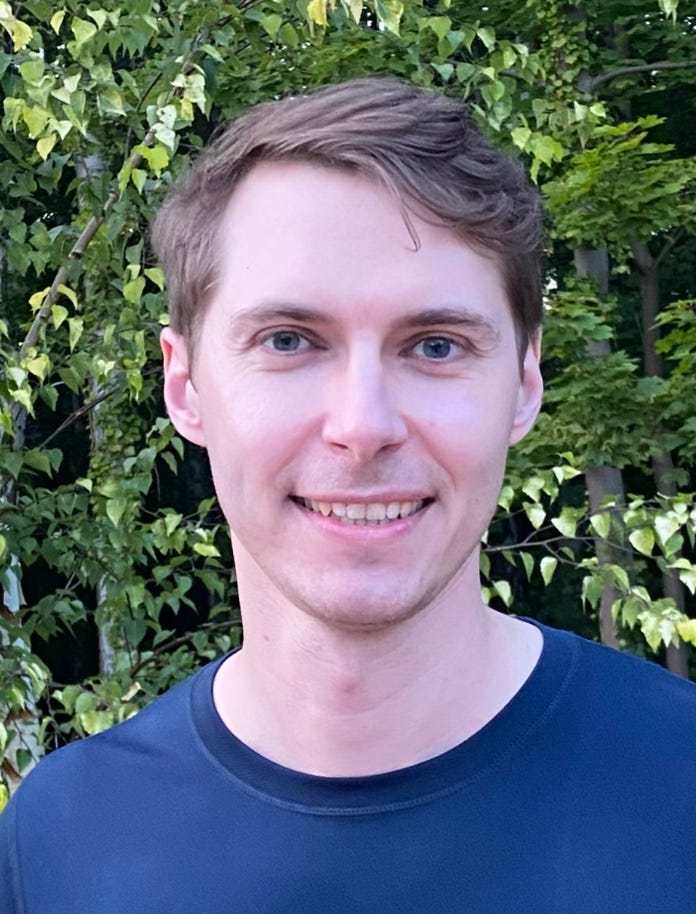
Tomasz Grzegorczyk is an Assistant Professor at Poznań University of Economics and Business and co-founder of the Humans & AI Lab. His research examines how people evaluate and accept artificial intelligence and other emerging technologies, and how these technologies affect organisations. Current projects include work on the impact of large language models on economic behaviour and on the acceptance of augmented reality. He has a background in economics and law and completed postgraduate studies in trendwatching and futures studies. His interests increasingly include the social and regulatory challenges raised by AI, as well as speculative fiction as a tool for foresight - exploring possible futures and preparing for them.
I've just started a Substack called Tomorrow, Human. It's about how people respond to emerging technologies, and what those responses might tell us about what comes next. Futures, researched and imagined.
The first post is already up: "When AI stops feeling like software: from Aibo funerals to mourning AI personalities".
https://tomaszgrzegorczyk.substack.com/