

The following short story was chosen as the runner up of the Democratic Futures Category for the 2026 Protopian Prize Fiction Contest hosted by Metagov and the Public AI Network. Congratulations Colby!
New Moon Rising, Summer, 2065
Ballona Wetlands National Wildlife Refuge
I drop from the rafters, freefalling toward the treacherous floor. My wings catch air and sweep me into the thick tornado of free-tailed bats. Spiraling into the sky, I survey the ingredients on offer. Tantalizing moths swarm over coastal wetlands. Juicy mosquitoes dance above the clam farm. I plummet to a freshwater pool, skimming its surface with my tongue, churning tiny waterwheels in my wake. Not one drop goes up my nose.
A metallic screech lacerates my ears. Shockwaves shove me into the water. I choke, beat my wings, fight for air until the pressure releases me. A burst of light stuns my eyes. Wings pump. Ears ring. I careen away from the pool and rocket home to my ravenous pup.
A buzzing machine circles our roost like a hawk. Humans crowd the dock in floating vessels, chanting an angry song.
Turn off your lights!
Keep our skies dark!
No backroom deals
In our public park!
I whiz through the open vent. My ears pop at the change in air pressure. Sweat, guano, and musk thicken the air as I speed to the interior creche. Flesh-eating beetles swarm the pups who fell to the floor during the explosion. I zip through a cloud of mothers screaming for their babies.
I call to my child at the frequency only she and I share.
Psee-tsip-ping.
My heart pitches with anxiety.
She answers. Psee-tsip-ping.
I dive into the wall of fur and home in on my child’s song. Tiny bodies writhe around me, drawn to my milk. I nudge them aside, clasp my daughter in my claws, and guide her onto my teat.
My heartbeat slows. She suckles.
For now, we are safe.
I need to hunt, but I wait for the dock to quiet. Locking my ankle ligaments, I hang into a light doze. My daughter detaches from her cuddle puddle and clambers over a larger pup.
A frantic chorus of descending trills jolts me awake. Mothers shriek. I unlatch and bolt toward the alarm, a narrow pipe near the vent that plunges down to the forbidden zone.
The panicked squeals of my pup and her friend echo through the pipe. They are in the zone from which no one returns. I call to my daughter on our private frequency.
She does not answer.
I dive into the pipe, shortening my wingbeats to fit the narrow passage. An ultrasonic buzzing dizzies me. I shoot into a concrete cavern blasted with light. My child’s echo-shape flutters toward the floor like a falling leaf. Her friend is grounded, not yet dead, but doomed if she cannot take flight.
The old human who dwells below our roost hobbles toward the forbidden zone, each footfall punctuated by the tap of his walking stick.
I shriek to focus my pup. Her sluggish wings flap. I flank her. She is too heavy to carry, so I push her. Above us, desperate mothers keen, their calls guiding us home.
The human shuffles into the cavern, reeking of chicken flesh, cheese, and the lemon stench of his bathing water. He stops. His stick goes still. “Huh.”
I shove my pup into the pipe and follow. We spill into the humid cauldron of our lamenting kin.
After nursing, I send her back to the creche and settle into a limp hang. Beside me, the mother whose pup did not return wails. I match her cries, easing them into calmer registers until she sleeps.
The Next Dawn
The slow breath of thousands of sleeping kin thickens the air. Each day, more bats crowd into our roost, drawn to its perch above the wetlands. I remain in a vigilant hang, wondering whether our home is safe or whether we will have to abandon it.
A water vessel shaped like a flipped osprey’s beak knocks against the pier. Midges billow off the displaced water. My claws tighten around the rafter, bracing for another explosion. The other mothers sink deeper into torpor, but I activate my hunting hearing. My mother taught me to never sleep through an unfamiliar sound.
The food-bringer arrives every quarter cycle of the moon. Humming softly, she rises from the vessel and rolls a wheeled box up the path, her wide hips swaying and her neck held like an egret’s. In her other hand, she cradles a paper bag reeking of warm grease.
Seagulls circle overhead, their eyes fixed on the box.
The old one creeps to the entrance with the wary gait of a heron disturbed at the water’s edge.
“Abuelito.” Her fingernails tap on the old one’s window. “Are you all right?”
Like all humans, she vocalizes within extremely limited frequencies, yet her sounds are precise and patterned.
He unlatches the entrance. “No. That flare was outrageous. I called for help and no one came.”
“I know.”
“It’s criminal. Trespassing after hours. Violating park rules.”
The food-bringer places the smelly bag in his hands.
He inhales. “You brought French fries! Thank you, mija.”
She laughs and rolls her box into the food chamber. “I always bring you fries. Today, it’s a double helping.”
He shuffles to his soft spot. The bag crinkles in his lap as he inserts the greasy stalks into his mouth one at a time. My nostrils flinch. Why do humans eat such vile food?
His molars grind. “Were they friends of yours?”
She opens a drawer filled with rattling metal. “I know some of them, but I know a lot of people.”
“Do you agree with them?”
She releases a slow breath. “Abu, why did you turn on the second-story lights? They’re so bright. I can see them from Baldwin Hills.”
The old one smacks his lips. “I’m not under your dark-sky edict.”
“Why are you provoking people? You don’t even live up there anymore.”
He chews an absurd, greasy root. “I can do what I like. It’s my property.”
She returns to the sitting chamber and kneels before him. “The Whole Earth Court granted the protestors a hearing.”
He swallows and coughs. “What? Are you serious?”
Her fingertips rest on his knees. “They want you to leave your house.”
“Jordy promised I could stay here forever.”
“Abu, Jordy is dead, and no one can find a record of the agreement.”
“We shook on it. And the new park commissioner said she’d honor it. Where’s my cane?”
His hand searches beside the seat. She guides it to the handle. He grips the stick and pounds it against the floor. My claws tingle from the faint vibration.
“This was my land.”
She rises and returns to the food chamber. The air sharpens with the acrid scent of stress.
“This was never exactly your land, Abu.”
She unsnaps the top of her box. The chill of frozen water stiffens the air. She scoops three large clams from a mound of clattering ice and sets them on a stone surface.
He crinkles the bag and tosses it into a small cavern reserved for his guano.
“What I built was visionary.”
She wedges a sharp metal tool into a clamshell. The shell pops open, releasing a briny aroma. I inhale the delicious Dockweiler terroir of beach-dwelling mosquitoes, already tasting seaweed, sky, and a citrus trace of tidal spray beneath my midair snap. I salivate, eager to hunt.
She places the open clam on a porcelain disk and sets it beside the old one.
“Eat your clams. Please. I harvested them this morning.”
He groans. “I don’t need your clams.”
Her slim fingers push the disk closer. “Abu, the fungal pandemic is over.”
He grips his walking stick between his knees. “I’m not coming in.”
She sits on the edge of his soft seat. “If we get your pathogen balance right, you can live with us and spend time with your great-grandchild. If we don’t, you’ll have to move into a sealed assisted-living facility. Is that really what you want?”
He thumps his walking stick. “I wouldn’t be alive if I hadn’t stayed isolated.”
She rubs the back of her long neck. “They’re not the same clams. I’m an immuno-certified farmer. These are medicine.”
“Every time with the clams.”
“They’ll help you.”
“I don’t need your help.”
She inhales tightly. “Abu, I’m the only one you see. What if something happens to me?”
“If they allowed grocery drones out here, it wouldn’t be a problem.”
“Abu.”
“I haven’t left this property in twenty-three years and won’t now. Not after what happened to your mother.”
“Don’t go there, Abu. Not today.” She jerks upright and snatches the disk. “I was up all night defending you.”
She carries it to the food chamber and pries open the two remaining clams. Metal scrapes against shell. She places them beside the uneaten clam on the porcelain disk.
“I’m not raising gull food, you know.”
She carries the disk to a soft seat opposite the old one and sits.
He squirms. “Please, eat.”
She slurps a clam. “They think you made a backroom deal before most of them were born. They don’t understand you.”
The odor from his armpits sharpens. “Then tell them to learn their history, including where the name of their court comes from.”
She lifts another clam toward her lips. “Come to the hearing and tell them yourself.”
“At my age, I don’t need to be in some popularity contest.”
She lowers the uneaten clam to the disk. “If you don’t attend the hearing, you could lose your home.”
“Then I’ll sue the punks and the city and the park and whoever I need to for as long as I need to.”
“You can’t file a lawsuit unless the Whole Earth Court authorizes it after the third hearing.”
He pounds his stick once. “Since when?”
“Since WEC was given primacy over parks and ecotones.”
“So many hearings.”
“There are a lot of perspectives to consider.”
“AI can analyze everything to kingdom come in two seconds.”
“Caring takes time, Abu. So does learning how to live with people who see the world differently.”
He shifts in his seat. “Look, thanks for the fries.”
“Uh-huh.”
“Your mom made her own choices.”
“I know.”
She stands and sets the disk with the two uneaten clams beside him.
“How about if I represent you in court?”
He pulls his stick to his chest. “I have a right not to explain myself.”
She releases a sharp breath. “Don’t you trust me to tell your story? Do you have anyone better?”
“Fine.” His grip loosens. “Represent me.”
She moves closer. The air between them compresses. She squeezes his shoulder.
“All right, Abu.”
She closes her box and exits his den.
He hoists himself to his feet, picks up the disk, and trudges to his entrance. He watches her roll the box down the trail and lower it into her water vessel. As she rows downstream, he tosses the clams onto the pickleweed.
Screeching gulls plunge and battle for the catch.
Three Sun Cycles Later
A water vessel knocks hard against the pier, jolting me from torpor. Around me, mothers startle and cry. I tense, ears tuned to the unexpected arrival.
The food-bringer darts up the path. Her rolling box is absent. No gulls circle overhead. No warm grease defiles the morning air.
She pushes through the den’s entrance without knocking. “Abu, are you awake?”
The old one lifts his head from the back of his soft spot. “What are you doing here? I saw you three days ago. It’s too much exposure.”
“Didn’t you get any of my messages? The first hearing is about to start.”
“Messages are like flies. Best to swat them away.”
She takes his arm and helps him stand. “They offered to hold it on the water for you, where the creek meets the ocean. We can kayak there and join the hearing from the boat.”
He stretches his thin legs. “I’m not leaving my house. You go.”
She laughs. “I figured.” She guides him to a hard seat in the food chamber and gives him a small vessel of water. “I’ll join the hearing from here, then.”
“In my house? No!”
“Virtually.”
The monotonous crackle of a human box fills the chamber. She pulls a billowy material, textured like hanging moss, across the river-facing wall. It dulls the room’s echoes, leaving the electric hum exposed.
“We can both join from this table.”
“I’m not coming.”
“Fine, Abu. Do you want me to go into another room?”
He sets his glass vessel on the flat wood. “No. I want to listen off-camera. Don’t tell them I’m here.”
She moves her seat away from him. “Ready?”
A low rumble passes through his torso.
A flock of human voices bursts into the chamber. The food-bringer and the old one tense as though other bodies have entered the room. Yet when I strain to map the newcomers, my clicks return only empty air.
A voice rings as bright as fresh rain. “Good morning from the ancestral lands of the Tongva and Kizh peoples. These Ballona wetlands, dunes, and waterways were shaped by generations of Indigenous land and water management long before Los Angeles existed. That knowledge continues through Tongva- and Kizh-led restoration work happening here now.”
Another voice tumbles like surf from the humming wall. “Thank you, Tribal Co-Steward. I am the Presiding Convener of the Los Angeles Chapter of the Whole Earth Court. This is the first hearing in the matter of Holden Green. Today, we’ll hear from each party and identify what needs examination before the next hearing. Mr. Holden is represented by his granddaughter, Dr. Olivia Holden.”
A new voice whistles like wind through reeds. “For years, the Dark Sky Coalition has accepted the first-floor lights as a compromise. The second-floor illumination violates that compromise. We ask the court to require Mr. Holden to turn it off.”
The old one mutters, “You don’t have to look.”
The surf voice rolls in. “That is one possible remedy. The Coalition has requested another.”
The reed voice continues. “Mr. Holden doesn’t even live in his second story.”
The old one raps his gnarly knuckles against the eating platform. “How would you know?”
The surf voice intervenes. “I’m curious… is the off-camera voice we’re hearing Mr. Holden’s?”
Holden. The sound echoes through this strange human colony. Holden.
The old one’s throat stiffens.
After the beat of one wave breaking, the food-bringer replies, “My grandfather prefers to remain off-camera.”
“Welcome, Mr. Holden. Would you like to respond?”
Holden. Holden. I try to mimic the sound, but only clumsy clicks emerge.
Cloth whispers as the food-bringer turns toward the humming wall. “My grandfather would like to hear the Housing and Equity representative’s story first.”
“An admirable choice. Housing and Equity Representative?”
A stony voice rumbles. “Mr. Holden is the only private resident living inside the park.”
The old one flinches at the sound, “Holden.”
The stony voice continues. “We taxpayers are funding the infrastructure that is supporting just one man in a vast mansion that could be serving our ecological or housing needs. Instead of acknowledging his extraordinary privilege, Mr. Holden flaunts it with lights that appear flagrantly hostile. I propose that we commission a study to determine the best use of the property.”
The surf voice cuts in. “Let’s separate the lights from the motive. We know what he did. We don’t yet know why.”
The old one grips the edge of his drinking vessel. It resists his pressure, sending the force back through his arms.
Holden. The disembodied voices call the old man Holden. This is his name.
I detach from my rafter and race around the roost like an exhilarated juvenile.
Holden!
I latch back in, eager to hear more.
The surf voice returns. “Dr. Olivia Holden?”
Her voice undulates throughout the chamber. “The protesters launched illegal flares to harass my grandfather. If they care so much about dark skies, why did they set off flares over the wetlands?”
A new voice pecks out a string of staccato clicks. “As the Civic-Legal Liaison Arbitrator, I must note that the flare violation falls outside this court’s jurisdiction.”
The food-bringer presses her back against the seat. “Fine. But my grandfather made an agreement with the former park commissioner allowing him to remain in his house. That agreement has stood for forty years. It should stand now.”
The reed voice whistles. “How do we know the agreement ever happened? It’s oral history.”
Holden’s throat rumbles. “Jordy and I shook on it.”
The fresh-rain voice returns. “The fact that an agreement was oral does not make it invalid.”
“Even if there was an agreement,” the reed voice says, “it should be changed.”
The food-bringer inhales sharply.
Holden hoists himself onto his creaking hipbones and plants both hands atop his walking stick. “Enough. I’ll tell my own story.”
He faces the humming wall. The acoustic dimensions of the chamber shift. His knobby torso interrupts pathways that have been empty all morning.
“You people don’t remember anything. Holden Green was the crown jewel of the Westside from Playa del Rey to Venice Beach. We had everything for fully sustainable living—water catchment, greywater recycling, solar skins, habitat walls, vertical food farms. Everything. When most of my property was taken through eminent domain for 30x30 and then 50x50, did I resist? No. I didn’t. Why? Because we finally got a national park through. I was behind that. All I asked was to keep this small remaining portion, and the city agreed. Just because you don’t like that agreement doesn’t mean you can renege on it.”
The food-bringer pulls the empty seat toward her. “Abu, they’ll hear you better if you sit.”
He breathes hard, then lowers himself into the chair. She passes him the water vessel. He drinks before continuing.
“I’m ninety-five years old. All I ask is to live out my days in peace. I’m not out to be an asshole. I turned on the lights because of the bats.”
The food-bringer turns to him. “Abu, bats? Why didn’t you tell me?”
“Bats?” Voices repeat the sound through the humming wall.
My wings tighten. Bats. I almost know this sound. The mother hanging beside me stirs in her torpor. My ears flare with curiosity.
Holden splays his hands on the eating surface. “Yes, there are bats living in my attic. And they’re trying to expand into the rest of my house. If you want me to turn off my lights, send someone out here to remove them. Please.”
Overlapping voices pattern the room.
The surf voice returns. “The bats weren’t named in the petition. We can’t consider relocating a colony we haven’t heard from. The Ecological Sciences Arbitrator has the floor.”
A dry voice rasps. “We should send a bat-communication specialist to study what they’re saying.”
Holden reaches for his stick. “I don’t need to know what they’re saying.”
“That’s interspecies aversion,” the rasping voice answers. “The possibility of communication makes some people want it less.”
“It’s called having healthy boundaries.”
“Perhaps if we learned that the bats were willing to move, WEC could consider relocating them.”
Holden spits out a laugh. “That’s the most ridiculous thing I’ve ever heard. I want you to remove them, not move into my house and study them.”
“Well, that’s the problem. Without good cause, park rules prohibit us from moving them.”
Holden’s fingers still around his stick. “These bats do not have more rights to live in my house than I do.”
“If females are pupping, federal law could protect the roost.”
“Huh.”
He pushes himself to his feet and raps the humming wall with his stick.
The whining hum stops. The voices vanish.
“Abu, you can’t just leave a meeting like that.”
Holden grunts. “We started the managed ecotone retreat movement. Without us, their court wouldn’t even exist.”
“Are you all right?”
The creek gurgles.
“Mija, tell them I’m sorry. Tell them to let me be.”
She squeezes his shoulder and pecks the top of his head with her lips. “Okay, Abu. I’ll row down there and finish the hearing in person.”
The food-bringer returns to her vessel and rows toward the ocean. The house stills. Shorebirds whistle. Wind hisses through the marsh grass. Holden chuckles softly. Our roost respires. I elongate into a loose hang, then sink into torpor, dreaming of the migrations I once made with my mother.
When the heat of our sunbaked roof gentles, I rouse to a chorus of mewing pups. My own child darts through a cacophonous flurry of wings and latches to my breast. I shove her away. She pulses with confusion. Anguish ripples beneath my fur, but she is ready.
In my auditory periphery, I register Holden hobbling through the forbidden zone directly below me. My heartbeat accelerates. Panicked mothers screech.
My pup joins the throng spiraling into the violet sky. May she hunt well. May she avoid hawks and owls. May she be lucky.
Wood knocks. Metal clangs. Holden’s fingerbones scrape against hemp rope. A portion of our floor opens. Piles of guano spill into the forbidden zone. Cold air shoots up into our roost, followed by a shaft of blazing light that vanishes. Holden shouts through the opening. The ultrasonic menace whines beneath his voice, setting my ears ringing.
I bolt from the roost. Skimming water from the ponds, I slake my thirst.
These are ancient feasting grounds, but when my mother migrated north for good, few kin followed. They did not believe she had found a concrete roost as cavernous as a mountain cave, high enough for us to breed and fly. They did not believe that only one small human family inhabited the estate.
Too cold, they t-sipped. Too cold for birthing and keeping our pups warm.
But my mother felt the warming seasons encroach as inevitably as an incoming tide. When thousands of babies in her southern roost overheated and died, she dared to flee north with me in her belly.
If we need to leave our roost now, so be it. I am my mother’s daughter.
Then I race.
Propelled by adrenaline, I scoop jawfuls of mosquitoes, banking and diving with ferocious artistry. I speed along Ballona Creek to the clam farm, then over the bluffs and up to Baldwin Hills. Flying faster than the human transport machines, I reach the northern boundaries of the city and go deep into the mountains. I ascend as high as the dome where people gather to watch the stars. Then I turn south, toward the mammoth vessels congregating like giants.
When the sky violets, I return home. Fear quickens my pulse. My wings tense in anticipation of what awaits inside.
I hurtle through the opening. Sweet, humid heat welcomes me. Darkness. My wings soften with relief. Though the shaft to the forbidden zone remains open, the ultrasonic menace I have endured my entire adult life is gone.
Psee-tsip-ping.
My pup calls to me on our private frequency.
Dropping easily through the wide opening into the forbidden zone, I locate her hanging in a furry wall. A thousand kin coo, click, and chirp in their new abode. Guano and sweat perfume the air.
My follicles prickle with pleasure.
The Next Full Moon
The food-bringer arrives while many of us are still returning from the night’s final hunt. Her water vessel knocks against the pier. The wheels of her box drum over the flattened marsh grass. Gulls circle above her as she climbs the path.
She enters Holden’s den. “Abu, you turned off the lights! Everyone is talking about it.”
Holden pushes himself out of his soft spot and hobbles to the eating area.
“Thanks for coming early. Do you smell anything?”
“Nothing unusual.”
“Good. The air filters are still working. Go outside and look up.”
She walks outside and cranes her neck like an osprey.
“Oh!”
She reenters the dwelling. “There are so many of them.”
She unloads her rolling box. An alluring briny aroma fills my nostrils.
Holden lowers himself onto a wooden chair. “I gave them the second floor.”
She shucks a clam. “Gave who the second floor?”
“The bats.”
She places the open clam on a porcelain disk and climbs the steep passage toward our new zone.
I stiffen.
“Stop,” Holden calls. “You can’t go in there. It’s a maternity roost.”
She stops and turns. “Really?”
“I’m pretty sure.”
She returns to Holden.
His voice lifts, lighter than I have ever heard it. “Now that the colony has expanded, I reckon it’s protected under federal law. It’s illegal to disturb a maternity roost during breeding season.”
She laughs. “Always the developer.”
“And I’m their guardian. Go ask WEC to make it official.”
“You do realize that if they agree, you won’t be left alone. There’ll be oversight and species monitoring.”
“At least I can stay in my house.”
The food-bringer rolls her empty box down the path toward the river. As she pushes away from the pier, Holden plucks the clam from the porcelain disk.
He touches the open shell to his lips.
Outside, gulls circle, waiting.
The Protopian Prize Fiction Contest is a short story fiction contest, futures research project, and creative community dedicated to enhancing our capacity to imagine and manifest optimistic, achievable futures for humanity. The contest is hosted by Metagov and the Public AI Network. See more at protopianprize.com.
About the Author: Colby Devitt
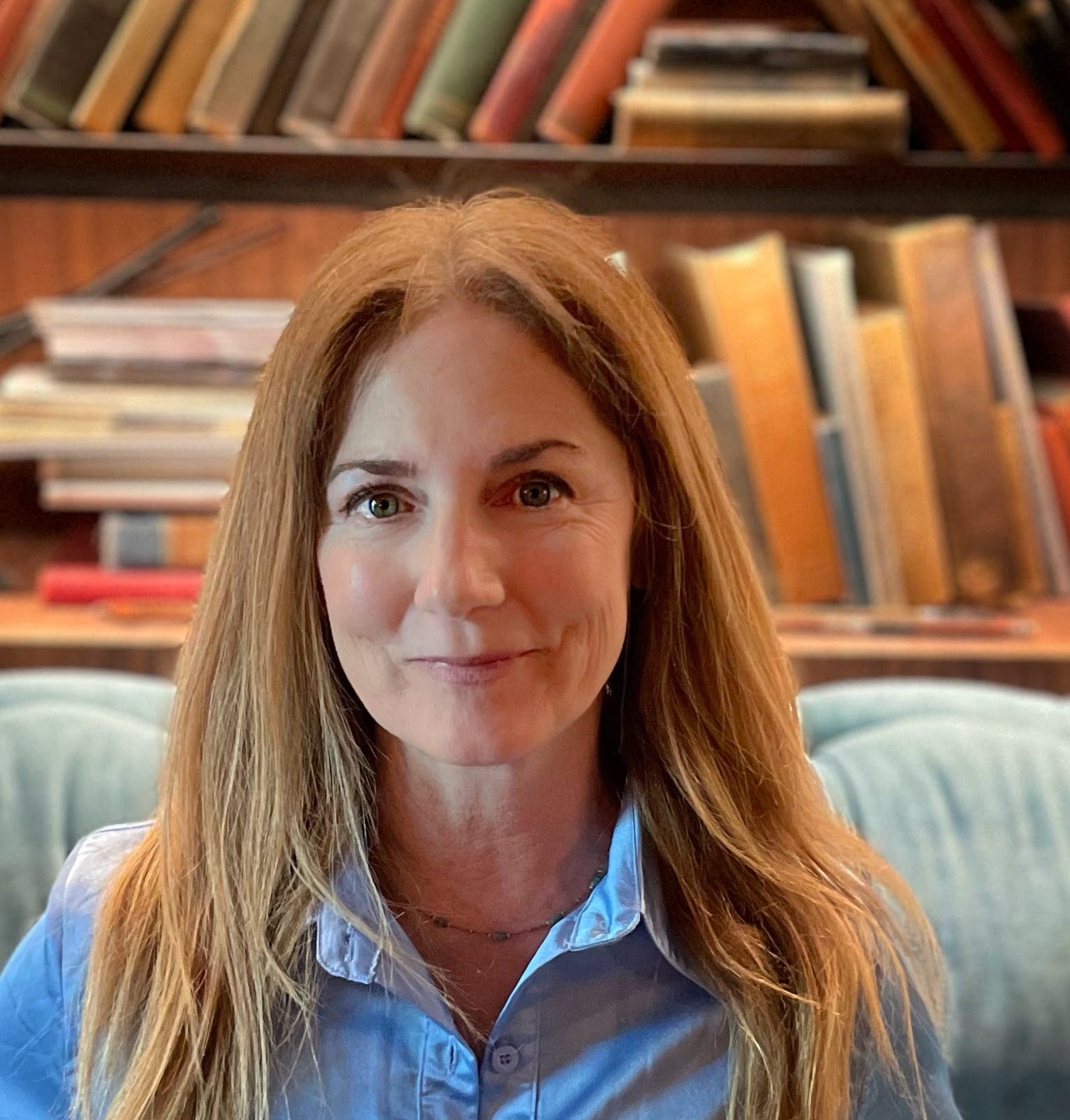
Colby Devitt is a Los Angeles–based writer whose fiction explores ecology, transformation, and possible futures for humans and the more-than-human world. Her fiction has appeared in Grist’s Imagine 2200 climate fiction series, and she was a founding fellow of Margaret Atwood’s Practical Utopias. Her essays have appeared in YES! Magazine, Truthout, and BillMoyers.com. She serves on the board of the Anaïs Nin Foundation and works on environmental policy and advocacy through the Sierra Club.

Colby, I deeply enjoy your piece. I was not expecting the subtle intersections and conflicts that come with all more-than-human contact zones, and it was a pleasant surprise to read how the piece resolved. I don't know if you are familiar yet with the late Australian multispecies scholar Deborah Bird Rose, but her final book--Shimmer--is about flying fox-human coexistence in Australia from a more-than-human perspective. She's a wonderful writer. Her book Wild Dog Dreaming: Love and Extinction, Dingo Makes Us Human, and Reports From a Wild Country: Ethics of Decolonisation are wonderful environmental humanities philosophical ethnographic engagements with Aboriginal culture, more-than-human co-becoming and more. I suspect her work will speak to you. I am so glad to find someone who is also transmediating these kinds of predicaments into fiction. I do it from a speculative, dark fantasy approach, in a sentient, animist world, where species/kind/caste boundaries are policed, hybrid beings are hunted, and magic is ecological. I look forward to talking more about how to draw readers into a different relation with the more-than-human through fiction. And welcome to Substack!