

The following short story was chosen as the winner of the Democratic Futures Prize Category for the 2026 Protopian Prize Fiction Contest hosted by Metagov and the Public AI Network. Congratulations Sean!
The river had a number for everything and I read the numbers to Mar just like you read to someone who can no longer hold a book. Flow at Towanda, four thousand and change, low for June; dissolved oxygen good; turbidity climbing because the rain three days back had pulled the hillsides into the water, and the water carried the hills down toward the bay. I read her Wilkes-Barre and Danville, then the Pine Creek gauge the youth crew rebuilt last spring, and she lay against the pillows with her eyes shut and corrected me when I said the names wrong.
“Loyalsock,” she said. “You’re saying it like a tourist.”
“That’s how it’s spelled.”
“It isn’t spelled for you. It was named before spelling.” She opened her eyes. They were the only part of her the cancer had not reached yet, still that wet startling green, the green of the deep pools under the hemlocks where the water goes so clear it stops looking like water and starts looking like thought. “Say it again. Lo-yal-sock. Let the middle of it be soft.”
I said it again. She nodded, satisfied, and shut her eyes, and somewhere under the house the sump pump came on and ran, because the water table here was rising too, because the water was getting into everything, into the fields and the basements and the cells of the people who had spent their lives near it, and Marguerite was sixty years near it and the water was in her now, in her liver and her bones, and the doctors at Geisinger had a name for her diagnosis but in my head I thought it was the river calling its loan. She would have hated me for thinking it. She did not believe the river took anything, she believed it only ever gave, as the woman who taught her believed it, as I was supposed to learn to believe it.
The taking was ours, always ours.
I tend the water; that’s the short way to say it. The long way is I’m part of the restoration crew for the upper basin, a cooperative, twenty-six of us owning it together, answering to the watershed assembly and to no one richer than ourselves, because there is no one richer than ourselves, not here, not anymore. We treat the acid. The coal came out of these mountains for a hundred and fifty years and when the companies left they left the doors open, and the water came in and met the pyrite in the dark and turned itself to acid, orange and dead, and it has been bleeding into the Susquehanna ever since out of holes nobody can close, like open wounds; you don’t close the wounds. You build beds, limestone and compost, a wetland that does with cattails and time what no machine does as cheaply, and you tend it, and you keep tending it, because the mountain is not going to stop bleeding in your lifetime or your children’s, and our work is really about the company we keep with the wounds.
Marguerite taught me that before she was the Guardian. She taught it to me in a church basement in Sayre, a coffeemaker that burned everything and a circle of folding chairs, same way she taught me the other lesson, how to stay clean, and they were not, it turned out, two different lessons.
The morning the proposal landed I was up to my knees in the polishing pond at the Barclay site with Dvorah, the youngest of us, nineteen and built like a heron and twice as patient, and we were counting. It’s the half of the work that doesn’t pay but it matters most. We count mussels. The eastern elliptio, the homeliest animal God ever made, a brown stone that filters sixteen gallons of river a day through a body the size of your palm and lives, if you let it, longer than you will. They are the kidneys of the river. For ninety years they could not make young, because the elliptio cannot make young without the eel.
The mussel releases her larvae, thousands of them, smaller than silt, and they drift, and almost all die, and the few that live do so only if they happen to strike the gills of an American eel passing upstream, and they fasten there and the eel carries them, for weeks, against the current, climbing what the eel climbs, and on the eel’s body the larva changes, becomes a mussel, and lets go, and falls to the bottom of some creek a hundred miles inland to begin the century it has been given.
Dams cut the eels off for nearly a century, and after that the mussels just got old. Surveys before the compact found beds where every animal was eighty years on, elders with no young, clearing the river clean and waiting for a host the concrete would not let through. When they tore the lower dams out the eels came back, and we started finding glochidia on their gills again, and three years ago in Pine Creek we found the first juvenile elliptio recorded there in living memory, a thing the length of a grain of rice, and Marguerite drove out though she was already sick and knelt in the water in her good pants and held it on one fingertip.
Dvorah found one that morning at Barclay. She made a sound I had never heard her make. I waded over and looked at it in the screen, tiny, alive, and I felt that clean high feeling, the feeling that the world is good and I am inside its goodness, and I let myself have it for as long as it lasted, which Marguerite had taught me was the only safe way to have anything.
Then my slate buzzed with the assembly notice and I read it standing in the water with the new mussel in the screen at my feet, and that feeling went out of me instantly.
Tioga Lithium Cooperative, it said, which was a name somebody had paid to have emulate ours. Petition to the watershed trust for a remediation and recovery license, North Branch impoundments. Hearing Thursday. Under it, the part they knew would do the persuading for them, though it was not a lie: Jobs. Forty of them to start. Family-supporting, the notice said, on the old land, for the people of the old land.
My brother had worked nights in a fulfillment center outside the compact line for eleven years. I knew, reading it, that he had already seen it.
The lithium in the brine really is valuable and that is the trouble, because the easiest thing in the world is to fight a lie and the hardest is to fight a half-truth.
When they fracked these counties, before the compact, before I was born, they cracked the Marcellus shale a mile down and the water came up with the gas, water that had been sitting in the dark against that rock since the Devonian, since before there were animals with backbones, and it had taken into itself everything the rock had to give. Salt past the saltiness of any sea. Barium. Strontium. Radium, because the rock is faintly radioactive and always was. Lithium, because there are old volcanic ash beds folded into that shale and the lithium had leached out of the ash across three hundred and seventy million years and gone into the water, and the water went on holding it, steadfast as a mussel, until we drilled down and let it out.
They called it waste. They shot most of it back into disposal wells and woke faults that had been asleep since the mountains were young, and what they kept they stored in lined ponds, up the North Branch, fenced in and leaking on a schedule, the brine getting more concentrated every year as the water on top evaporated off. Here is the part that makes it the perfect trap. Our brine, the northeast brine, is the cheapest lithium in the eastern half of the country to pull. Low magnesium. High lithium. The energy transition the rest of the world is still trying to make runs on lithium, and a third of what the whole country needs is sitting in poisoned ponds on top of the towns that already paid for it once.
So the Tioga Lithium Cooperative was not, on its face, proposing to poison anyone. It was proposing the opposite. We will clean up the ponds your grandparents were left with, we will pull the lithium that is already there, already a problem, and use it to build the batteries that keep the lights on without burning anything, closed-loop, no new wells, just the old harm drawn down and turned to use, and we will pay your sons and daughters a living wage to do it on the ground their families farmed and mourned. We are not the thing that hurt you.
I read the technical filing twice, then I drove up to the ponds and walked the fence line in the heat and read it a third time on the hood of our truck, and that was where I found the place the half-truth ended. It was one line near the back, under pulling the radium out of the brine. “Off-site stabilization and managed storage,” the line said. The radium does not leave the world when you precipitate it out. It concentrates, then goes into a cake at the bottom of the process that gets hotter the more you run, and that cake has to be carried somewhere and stored for longer than there have been written words, and the filing’s plan for that was a truck, a road somewhere, someone’s water four or five generations on, when everyone who voted Thursday will be a name on a stone and the people living with the cake had never been asked.
That was the harm. A debt, structured to come due after the creditors were dead. The exact instrument I had taken out against myself at seventeen, the good feeling now and the cost later, but living it taught me that later is never as far off as you think; the cost always comes.
I knew what the river would say about it. The river would say no. The trouble was that the river says no through a dying woman who could not always sit up anymore and who had been refusing for months to tell me what to do.
She made it to the meeting Wednesday, the last one she would make in the clubhouse. Dvorah and I carried her wheelchair up the three steps because the lift had been broken since March and the contractor kept being someone’s cousin who kept being busy, a part of the new world nobody writes songs about, that it is still the world, the lift still breaks.
The rooms have not changed in the ways you would think, but they have changed in some ways you would not. We still don’t talk while another person is talking; we still let the newcomer go first; there is still bad coffee, though now it is grown in the rooftop beds two blocks over and roasted by a man named Pham who is also bad at it, so the badness has merely changed its source. Nobody told me, when I came in shaking and certain I was the worst person in the building, that I was sitting inside the oldest working democracy left in the valley. When everything else closed in the bad years, the mills, then the stores, then the clinics, then the churches, these rooms stayed open, because they cost nothing and belonged to no one and answered only to the people in the chairs. So when the floods came and the county government drowned in more ways than one, the people who knew how to run a room where everyone gets a voice and no one is in charge were the people who had been running these. The assembly downtown uses our rules, though they don’t know they’re ours. The chair is a servant and rotates out so no one mistakes the chair for power. You speak for yourself or you speak for the water, and you don’t speak over anyone. Group conscience, they call it, under the seal of the compact.
Marguerite did not share that night. She sat in the circle with the oxygen line at her nose and her hands in her lap, hands that had pulled limestone and planted cattails, and she listened, and afterward people came to her one at a time as if they were not going to see her many more times, and she gave each of them something, a sentence, a joke. At the end the man chairing said it, and the room said it back, and Marguerite said it too, I watched her mouth make it, “keep coming back,” and I thought, she is going to die having kept coming back, and the rest of us are going to have to learn how to keep coming back to a room she is not in.
I drove her home. She was quiet most of the way and then on the river road, where you can see the water moving silver under the moon between the trees, she said, “You found the cake.”
I hadn’t told her. “I found the cake.”
“Course you did. You’re the only one of them who reads to the end.” She watched the river. “You going to testify.”
“They commissioned us to assess it. I have to, and we can’t take the work after, so nobody can say we want the contract.” I heard my own voice climbing toward that place it goes. “Marguerite, you can stop it. You can stand up Thursday and say it harms the river and that’s binding, that’s the whole point of the office, they made the office so the water gets a no that sticks. You say no and it’s no.”
She was quiet long enough that I thought she’d slept. Then she said, “So the year after I’m dead, and the year after that, when they want to pull the next thing out of the ground, and the Guardian then is some kid who isn’t ready, and the assembly has gotten used to the Guardian saying no so they stopped doing the hard part themselves, what happens.” It was not a question the way she said it. “A no that sticks is a loaded gun in the house, baby. You can have one. You keep it for the thing that’s actually going to kill somebody. You pull it out for a hard day and pretty soon it’s the only thing in the room that talks, and then it’s not the room deciding anymore, it’s the gun, and a room that’s stopped deciding is how you got the old world. I can speak for the river.” She turned and looked at me, and the moon was on her face, and her eyes were still those deep pools. “I can’t speak for you. I never could.”
That was sponsorship in two sentences. She could walk me to the water, but she could not drink it for me.
My brother, Eli, came to the house the night before the hearing. Four years older, which had meant everything when we were young, which had meant he went first into every room of our lives, including the fellowship, and I followed him. Here is what I have never said out loud, that my brother did not find the pills, I found the pills, and then I set them on my brother’s dresser, and we went down together. Eli got clean a year before I did and has spent the eleven years since holding a job and holding his sobriety with hands that have never stopped shaking, in a warehouse outside the line where they scan his eyes when he clocks in and an algorithm decides if he hustled enough. Basic income exists, so no one in the compact starves, but a man does not get up at night for a number on a card. A man gets up for work that the world needs done, honorable work. Eli had been getting up for eleven years to do work a machine could have done and would, the moment policy made it cheaper than him again.
He stood on the porch and would not come in because Marguerite was sleeping and he had always been careful around her, he knew what she was to me, the mother our actual mother couldn’t manage to be. He’d brought two coffees from the gas station out of an old habit, and he handed me mine and we stood at the rail looking out at the dark yard.
“You’re going to kill it,” he said, and he sounded tired.
“I’m going to tell them what’s in it.”
“I read it too. Closed loop, cleans the ponds. It’s the ponds on the Tunkhannock side, where Pop’s people were. They want me to lead a crew, forty to start, me running ten of them, really doing something. Not in the warehouse.”
“I know.”
“You got a river,” Eli said. “You got a whole river to speak for. I got a warehouse and a card with a number on it.” He wasn’t accusing me. He turned the coffee in his hands, the shake just visible, and looked out at the trees where our father’s father had been driven off the farm by the same men under a different name, and he said, “I’m not asking you to lie. I’d never ask you that. I just need you to know what you’re standing on when you stand up. That’s all. I need you to know it’s me down there.”
I had known it since the notice. The debt I owed him was the one debt I could never get to the end of, because I owed it for the thing that broke us both, and here was the world handing me the chance to pay it, and all I had to do was not read the filing out loud to the end, let the good feeling now be the whole story and let later be someone else’s struggle.
“I love you,” I said, which was not an answer, and he understood it wasn’t, and he finished his coffee and set the cup on the rail before heading down the steps into the dark, and the last of him I saw was his hand lifting at the bottom of the steps and falling again before it finished the wave.
The fire hall was full Thursday like I had not seen since the last flood vote. They brought chairs in from the church. The Tioga people had a presenter, a woman named Okafor, and the easy thing would be to make her a snake, but she was not a snake; she believed it. She had slides and the data were mostly honest, she had grown up in Scranton with a grandfather who worked coal, and she meant every word about cleaning up the ground.
She made their case. The ponds are a standing wound, all true; the lithium is already out of the rock, already a hazard, leaving it is its own harm, all true; closed loop, no new wells, all true; forty jobs, then a hundred, on the old land, for the old families, the wage rising, the work dignified, and around the hall I watched the faces of people who had spent three generations being told their towns were used up, lighting at the idea of being chosen, of the ground that had taken everything from them being the ground that finally gave something back. I watched my brother’s face in the third row do it too, and I understood that I was not standing between the river and a corporation. I was standing between the river and a roomful of my neighbors’ hope.
A man named Brennan, who farmed up past the ponds and had wanted the lithium money since the first rumor, said before the assessment could be heard that the restoration co-op had a conflict, that we’d lowball any project that wasn’t ours, and that of course the water people would say the water said no. The chair that month was a retired nurse named Ruth who had buried two husbands and feared nothing, and she looked at Brennan and said, mild as milk, that the co-op was barred by its own charter from taking a dollar of the work either way, that they’d written that rule precisely so this accusation couldn’t be made, and that we would now please hear the assessment, principles before personalities, and she did not know she was quoting the old program but I knew, and somewhere in me Marguerite’s voice said see, the rules hold, built by people who knew themselves, and they hold even when you’re scared.
I stood up.
I had my report, the chemistry and the precipitation curves and the radium counts rising in the aged cake, and I had meant to read it like the gauge numbers, flat, let the facts do it, but I got through the chemistry, and then I looked up and saw Eli, and I set the papers down.
“I’m not going to tell you the lithium’s a lie,” I said. “It isn’t. The ponds are a wound and they want healing and these people came here to heal them and I believe them. What I’m about to say isn’t about them being bad.” My voice was not flat anymore. “I came up in the rooms in this town. A lot of you know that. A lot of you came up in them too, or your parents did, or you carried somebody through. So you know the thing I know. The first one is the best one. That’s the trick of it. The first one is free and it asks for nothing, and you’d swear, standing there with it in you that there’s no cost, that the people warning you are scared for nothing. Then later comes. Later always comes. It comes for you and then when you’ve got nothing left it starts coming for the people next to you, and by the time you can see it you’ve rearranged your entire life around the thing that’s killing you.”
The hall was quiet.
“They’re not lying about the lithium. They’re lying about later, and the filing does it for them. It’s got a line about off-site managed storage. When you pull the radium out of the brine it doesn’t disappear, it concentrates, it goes into a cake that gets hotter the longer you run it, and that cake has to be held somewhere for generations. The wages and the clean ponds are now. The cake is later, in some valley we’ll truck it to, contaminating the water four generations down, and there’s a kid who isn’t born yet and doesn’t get a vote tonight and they’re going to live next to what we decided was worth it. I know what it costs, and I am telling you the cost is real even though you can’t see it yet.”
I sat down. I could not look at Eli.
Then came the thing I had heard about in Marguerite’s account of how we got here and never believed until I watched it in that fire hall. The room started to think.
Ruth recognized a woman from the Tunkhannock assembly who said the ponds did need cleaning and her town would not accept the cake, full stop, not for any number of jobs. Okafor said the cake had to go somewhere and someone said then the harm is real, you just told us so, and Okafor, to her credit, did not deny it. A man from the cooperative federation stood and said the law was plain that water and what was dissolved in it could not be owned, the brine was commons even poisoned, especially poisoned, and so the only lawful way to touch it at all was as a public trust, the watershed doing the cleanup, taking the lithium and the cake both, no private corporation dressed in our clothes taking the metal and leaving us the radium. Someone said but who does the work, and a federation man said the work is the work, it pays the same either way, and a remediation done by the watershed for the watershed could hire every hand the company promised and answer to the assembly for every gram of the cake.
It progressed naturally like that. People got it wrong, got corrected, got angry, got walked back. Brennan said the trust would be slower than a company and a woman said good, slow is the point, fast is how we got the ponds in the first place. They argued over the cake for an hour. They could not make it disappear, because it does not disappear, and what they decided was not a yes or a no but a third thing, made out of refusing to take the first offer. License the cleanup, because the ponds are a real wound and leaving them is a harm, but to the trust, not the company, the brine staying commons the way the law and the dead and the unborn required. Hire the crews, all of them, Eli’s forty and the hundred after, doing the remediation the company would have done, except the lithium revenue runs back through the watershed instead of out of it. The the radium, the part that comes due in four generations, does not move until there is a way to store it that a Guardian can stand by and call safe, as the office of the Guardian is written into the trust as the standing voice for the ones who aren’t born yet and get the bill.
The radium is still a problem we handed forward, but smaller now, because some debts you can only make smaller, you cannot make them nothing. Brennan voted no because it wasn’t fast enough, a few voted no because it wasn’t pure enough, and it passed anyway, by the supermajority the compact needs when consensus won’t come, hands going up in the hall, a worse outcome than a clean no from the river, a better one than the company’s license, and the outcome the room had made itself, with its own hands, by doing the hard part instead of reaching for the gun, as Marguerite would call it.
Eli got his crew, people from the trust. He’d run ten hands doing the cleanup on the Tunkhannock side, on Pop’s people’s ground, at a wage that would let him stop getting up for a number, answering to the assembly and the water instead of an algorithm that scanned him at the door. It was not what he’d come to the porch wanting, but it was near it, close enough, and when the hands went up I finally looked at him and he was already looking at me, and his hand came up off his knee and this time it lifted all the way.
Marguerite did not see the vote. She was past sitting up by Thursday and the neighbors had started the rotation, the one she had taught them, two at a time around the clock, just like the queer kids of the generation before hers stood by the people dying of something the world had decided not to look at, just like the addicts of her own generation looked after each other during the fentanyl crisis. She had learned the sickroom from the dying and taught it forward, and now it had circled back to watch over her, Pham and Ruth and Dvorah who sat on the floor by the bed with a textbook she wasn’t reading, the rotation moving through the house unhurried because they had all done this before; in this town you learn to tend the dying like you learn to tend the water, by being shown.
I told her about the vote on Friday morning, but I don’t know how much got through. I let her know that we did the hard part. I told her Eli was on the trust’s crew, on Pop’s ground, and I thought I saw a slight quiver move at the edge of her mouth, the start of a smile, but it might have been the morphine. I have decided to believe it wasn’t.
She died on Sunday with the window open. It was June and the catbirds were going in the lilac and the river was four thousand and change at Towanda, low for the season, and the rotation was Ruth and me, and at the end it was just her breathing, slower and slower, like the ice growing out from the bank a millimeter at a time until the water underneath is still, except it isn’t still, it’s still moving down there, hidden. Ruth said the thing I couldn’t. Ruth said, “keep coming back,” so soft, and Marguerite went.
I drove up to Pine Creek the week after, and I waded in where Dvorah and I had found the recruit and crouched in the cold water with my hands in the gravel and found it, the juvenile, bigger than rice now, the size of a fingernail, alive, fastened to the bottom of a creek a hundred miles from any sea, filtering its share of gallons, beginning a century it would spend fulfilling the role it was destined for, however small.
It got here because an eel carried it from the Sargasso, from water so deep and far that no one has ever watched them breed, and it climbed out and somewhere on the way the larva fastened to its gills and rode the body of the creature that knew the way home, and changed, and let go, and fell, and lived. The mussel cannot get upstream alone. It never could. It waits its whole drifting life to be carried by something stronger, and the carrier takes it just going home the way it was always going, and the carried thing becomes itself on the body of the carrier and lets go and begins.
Marguerite carried me. She didn’t mean to be a mother, but she was the only one I had. She carried me upriver against the current even while she was dying. I have a river to speak for, and a brother on a crew on our father’s ground, and a creek with a new mussel in it, and a town that did the hard part once and will have to do it again, and again, because the cake is still up there cooling and the work is never a cure, not in our world, the work is the company you keep with the wound, tending it, one day at a time, keeping the water clean, same way I’m keeping myself clean.
I stood in the river until the cold reached my knees and then I climbed out and went home, because there was a meeting that night, and all you can do is keep coming back.
The Protopian Prize Fiction Contest is a short story fiction contest, futures research project, and creative community dedicated to enhancing our capacity to imagine and manifest optimistic, achievable futures for humanity. The contest is hosted by Metagov and the Public AI Network. See more at protopianprize.com.
About the Author: Sean Mooney
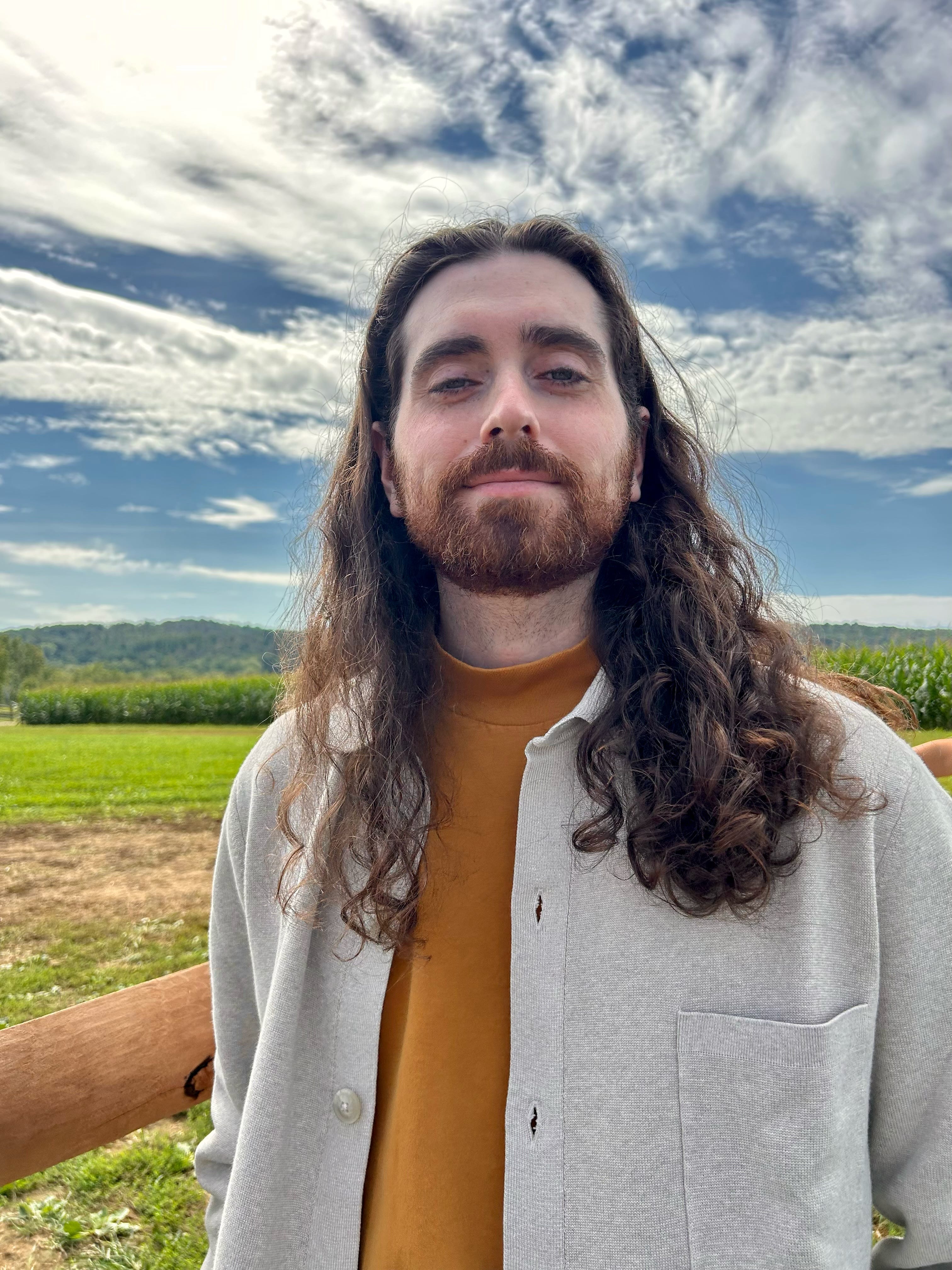
From Philadelphia, PA, Sean now resides in Central Pennsylvania and is a full-time student and employee, currently pursuing a degree in psychology while working as clinical-support staff in a local hospital. He is an autodidact, a highly sensitive and observant individual, whose outlook has been molded by his experiences during his decade long descent into opioid addiction. His insights on psychology, spirituality, and social and ecological issues were attained not in classrooms, but primarily on the streets of Kensington where he copped everyday during his active addiction. Sean feels strongly that through these difficult experiences, and with his opportunity as a person in recovery to pursue a formal education, that it is his purpose to formulate a message of hope for a better world, a more meaningful future, and a more beautiful life for all members of the human and planetary family.

What stayed with me was the refusal to make the choice easy. The jobs are real, the cleanup is real, and so is the harm that gets pushed far enough into the future that nobody voting has to live with it. I also loved the idea that some wounds are not solved once and for all. The work is learning how to keep tending them without pretending the cost has disappeared.
Congratulations on the prize win!